Facebook
 Instagram
 Twitter
 Youtube
 TikTok
 Newsletter Subscribe
LONDON 2012 PARALYMPIC GAMES
In his closing speech the then IPC President Sir Philip Craven described London 2012 as "the greatest Paralympic Games ever". London 2012 set the benchmark for all future Paralympic Games. The event broke multiple records and created massive shifts in attitudes and perceptions towards persons with disabilities. London 2012 did not just inspire a generation but transformed a nation forever.
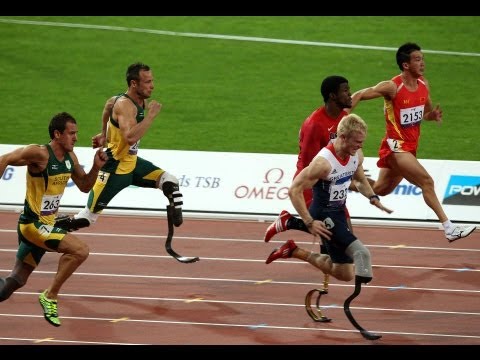
For the first time, the Games were positioned by the Organising Committee, media, broadcasters and commercial partners as a high performance sporting event. Para athletes were promoted on the strength of their amazing abilities, as opposed to their perceived disabilities.
Every worldwide Olympic partner signed up as a Paralympic sponsor, and many Paralympians starred in TV and billboard campaigns. British broadcaster Channel 4 led the way with its multi-award winning Superhumans TV commercial, and their breathtakingly innovative Games coverage was watched by two thirds of the UK population.
The Games attracted a record-breaking 4,237 Para athletes (2,736 men and 1,501 women) from 164 countries. They competed in 503 medal events across 20 sports in packed venues after a record 2.7 million tickets were sold. Fifteen NPCs competed for the first-time ensuring record participation in the Games.
More broadcasters than ever before covered the Games. TV pictures were beamed to over 100 countries, reaching a cumulative audience of 3.8 billion people.
Prior to Coldplay, Rihanna and Jay-Z closing the Games in spectacular fashion, Para athletes broke a staggering 251 world and 314 Paralympic records.
In his Closing Ceremony speech, Lord Coe, the President of the London 2012 Organising Committee, said British people would never think of disability the same way again. He was right, post Games research found:
• 1 in 3 UK adults changed their attitude towards people with an impairment;
• 65% agree the Paralympics delivered a breakthrough in the way people with an impairment are viewed in the country – up from a 40% expectation in June 2010;
• eight out of ten (81%) British adults thought the Paralympics had a positive impact on the way people with an impairment are viewed by the public;
• the Paralympic Games is about ability, not disability – and are about what people can do, not what they can’t do.
Today the Games continue to have an impact. In December 2018, figures from the Office of National Statistics revealed that there were nearly one million more persons with disabilities now in employment in Great Britain compared to 2013, the year after the Games.
SPORTS
The Games featured 20 sports, most of which took place in London with the exception of sailing at Weymouth and Portland, rowing at Eton Dorney and road cycling which was staged at Brands Hatch.

The full programme was; archery, Para athletics, boccia, cycling, equestrian, football 5-a-side, football 7-a-side, goalball, judo, Para powerlifting, rowing, sailing, shooting Para sport, Para swimming, table tennis, sitting volleyball, wheelchair basketball, wheelchair fencing, wheelchair rugby and wheelchair tennis.
TORCH RELAY
IPC President Sir Philip Craven was among the first five Torchbearers to carry the London 2012 Paralympic Flame after it was created at an emotional ceremony at Stoke Mandeville Stadium.
He was joined by four other legends of the Paralympics – Baroness Susan Masham of Ilton, Caz Walton, Sally Haynes and Jane Blackburn – after the four national flames were joined at the birthplace of the Paralympic Movement.
The Paralympic Flame then left on a 92-mile journey to the Olympic Stadium in a 24-hour torch relay that involved 580 Torchbearers working in teams of five.
Prior to the Stoke Mandeville event, National Flames were created at the summit of the highest peaks of the four home nations: Scafell Pike (England), Snowdon/Yr Wyddfa (Wales), Ben Nevis (Scotland) and Slieve Donard (Northern Ireland).
The four individual Flames were then placed in a miner's lantern and transferred to the nation's capital cities. Paralympic celebrations took place in London, Belfast Edinburgh and Cardiff.
Find out more about the London 2012 Torch Relay here.
OPENING CEREMONY

The London 2012 Paralympics Opening Ceremony was an unforgettable event with leading scientist Professor Stephen Hawking and renowned actor Sir Ian McKellen making an appearance.
The Ceremony took the form of a play, with Hawking introducing proceedings before Sir Ian took over, taking the role of William Shakespeare’s The Tempest and guiding the principle character Miranda through the evening’s proceedings.
All of the athletes received a huge ovation when they entered an Olympic Stadium drenched in colour, before gathering in the centre to play their part in the remainder of the ceremony.
The Games were officially opened by Her Majesty Queen Elizabeth II, before Royal Marine Joe Townsend brought the Paralympic Flame into the stadium.
Great Britain 5-a-side footballer David Clarke carried the Flame on, before the country’s first ever Paralympic gold medallist Margaret Maughan lit the Paralympic Cauldron.
MEDALS
For the third consecutive Games China topped the medals table winning 231 in total. This was 20 more than they won on home soil in 2008, underlining their position as a Paralympic superpower.
After finishing eighth in 2008, Russia showed the greatest improvement, climbing to second overall with 36 gold medals. Host nation Great Britain, who won 18 more medals than in Beijing, finished third whilst Ukraine and Australia finished fourth and fifth for the second consecutive Games.
In total 75 of the 164 competing countries won at least one medal.
OUTSTANDING PERFORMANCES
Swimmers were the athletes to take home the most medals from London 2012 with Australia's Jacqueline Freney (8 golds) and Brazil's Daniel Dias (6 golds) leading the way.

On the track Great Britain's David Weir and USA's Martin Raymond were in unbeatable form. Bouyed on by a vocal home crowd Weir took T54 gold in the 800m, 1,500m, 5,000m and marathon whereas 18 year old Raymond, who was making his Games debut, took T52 gold in the 100m, 200m, 400m and 800m.

In wheelchair tennis, Dutch sensation Esther Vergeer was reduced to tears winning her fourth Paralympic gold and 470th consecutive match.
There were also some big upsets in the Games. Brazil's Alan Oliveira beat South Africa's Oscar Pistorius to 200m T44 gold and Canada halted USA's hopes of a fourth wheelchair rugby gold in five Games with a semi-final defeat. Australia eventually picked up the gold.
ATTENDANCE AND COVERAGE
A record 2.7 million tickets were sold for the Games with most events and sessions selling out.
The Games were broadcast to over 100 countries and territories, the most ever. In the UK rights holder Channel 4 screened over 150 hours of live coverage, achieving record audiences. More than 11.2 million watched the Opening Ceremony - the channel's biggest audience of a decade - and most days the channel enjoyed the biggest audience share of all the main UK channels. Channel 4's coverage reached 39.9 million people - over 69% of the UK population.
London 2012 was the first truly social and online Games. Throughout the course of the Games there were 1.3 million tweets mentioning 'Paralympic', 25 million people visited London 2012.com and more than 5.8 million people downloaded the London 2012 Paralympic App.
The IPC also saw huge visitor numbers to its online channels. Nearly 2 million people visited www.paralympic.org - which broadcast over 780 hours of live action - and there were more than 5.1 million downloads of videos on demand during the Games from the official IPC YouTube channel www.youtube.com/paralympicsporttv.
The IPC's Facebook following increased by 350 per cent and there were 82.1 million views of its pages. Twitter followers grew by 50 per cent.
Samsung Bloggers, an innovative collaboration between the IPC, LOCOG and Samsung whereby many of the world's top athletes provided behind the scenes video blogs, also proved extremely popular. Over 600 video blogs were uploaded and were viewed by over 300,000 people.
CLOSING CEREMONY

The London 2012 Paralympics Closing Ceremony was a spectacular affair with Coldplay, Jay-Z and Rihanna playing to a capacity crowd.
His Royal Highness Prince Edward the Earl of Wessex was present to witness a spectacular show that illustrated the four seasons.
Paralympians Michael McKillop of Ireland, and Kenya’s Mary Nakhumicha Zakayo were given the Whang Youn Dai award for those exemplifying the spirit of the Games.
Speeches by Sir Philip and Sebastian Coe, Chair of the London 2012 Organising Committee, were followed by The Final Flame – a section to mark the closing of the Paralympic Games and the last night of London 2012.
The ceremony ended with a spectacular firework display over the Olympic Stadium and Park, providing a fitting finale to an entirely unforgettable London 2012.